
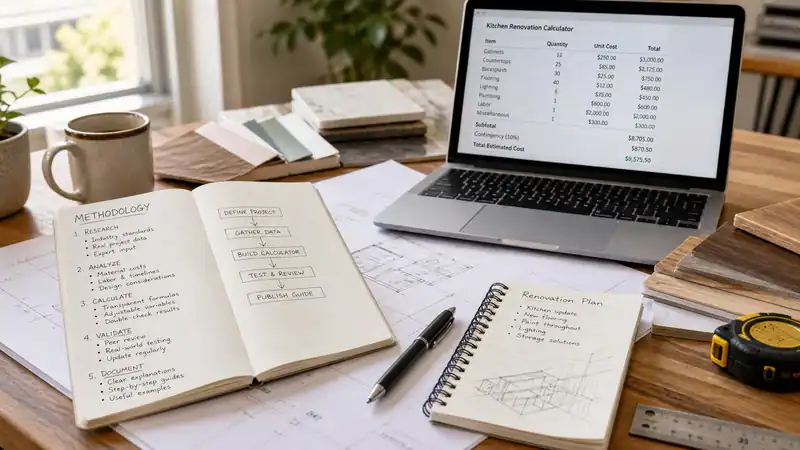
Why HomDera has a published methodology
This page describes the internal process we use to prepare HomDera guides and calculators. It explains how topics are selected, which parts of a calculation are checked and how we communicate assumptions, uncertainty and safety limits.
The checks described here are performed as part of our own editorial process. They are not independent certification, laboratory testing or approval by an external engineering body.
A calculator result is useful only when the reader can see which inputs, units and assumptions produced it.
How we choose topics
- The topic must answer a practical question that can be explained or estimated responsibly online.
- There must be enough reliable information to describe the inputs, method and limitations.
- We do not publish a universal instruction when the correct decision depends on an inspection, local rules or the condition of a specific property.
- Higher-risk subjects must include a clear point at which professional assessment becomes necessary.
How we develop practical guides
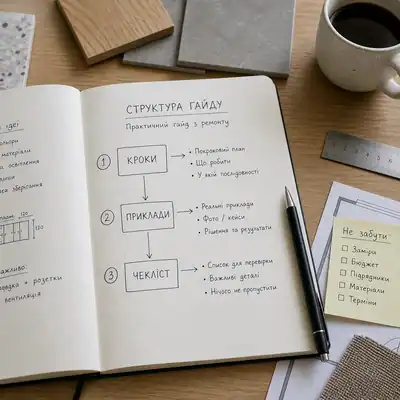
- Start with the decision or problem the page should help explain.
- Identify the measurements, product data, assumptions and limitations that affect the answer.
- Organise the guide around the actual order in which a reader would measure, compare or plan the work.
- Add an example or table only when it clarifies the method rather than repeating the text.
- Mark the point at which an online explanation is no longer sufficient.
What a guide should make clear
What the reader needs to measure or check before using the information.
Which assumptions are built into the example or calculation.
Which product data should come from packaging or manufacturer documentation.
Which conditions can make the general method unsuitable for a particular property.
How HomDera calculators are developed
Each calculator begins with a defined set of inputs, units and expected outputs. Before publication, we check whether the same inputs produce consistent results and whether the labels explain what the number represents.
- Inputs are checked for unit consistency, valid ranges and required values.
- Formula steps are compared with simple manual examples where practical.
- Test cases include zero or missing values, small and large inputs, decimal values and different unit selections.
- Rounding is applied only after the underlying calculation where possible.
- Result labels distinguish calculated values from user-entered assumptions.
- Technical outputs remain planning estimates and are not presented as certified designs or installation specifications.
What HomDera calculators take into account
| Category | Typical calculations | Important considerations |
|---|---|---|
| Flooring | Room area, flooring quantity, tiles, packs and waste allowance | Room shape, laying pattern, cutting, product dimensions and spare material |
| Walls | Wall area, paint, wallpaper, tiles and number of coats | Doors, windows, surface condition, product coverage and pattern matching |
| Electrical planning | Combined appliance power, approximate current and household load | Operating conditions, capacity margins, circuit protection and the limits of an online estimate |
| Batteries and UPS systems | Runtime, usable capacity, energy demand and backup power requirements | System voltage, inverter efficiency, depth of discharge, battery condition and real connected load |
| Renovation budget | Initial cost structure for materials, installation and related expenses | Delivery, tools, smaller supplies, price differences and contingency |
Calculation accuracy and uncertainty
Calculator accuracy depends first on the entered data. A correct formula cannot compensate for an incorrect room size, unsuitable product coverage, missing appliance load or an unrealistic waste allowance.
All HomDera results are estimates. A calculator cannot account for every feature of a particular room, product, electrical system or installation, and it does not replace a professional inspection, design or safety assessment.
Safety and limits of responsibility
HomDera does not treat hazardous work as a routine DIY task. Wiring, gas equipment, structural changes, work at height, major demolition and permanent battery or inverter installations require suitable qualifications, tools and knowledge of local requirements.
- Online information cannot confirm the condition or safety of an existing installation.
- Local building, electrical and safety rules take priority over a general website explanation.
- Work should stop when there is an immediate risk to people or property, and the appropriate professional or emergency service should be contacted.
How we review and update content
- Confirmed errors in formulas, examples, units or result labels are corrected on the affected page.
- Pages are revised when new calculators, changed product information or clearer explanations make an update necessary.
- Safety notes are added or strengthened when a page could otherwise encourage an unsuitable DIY decision.
- Reader reports are checked against the page content, entered values and relevant reference information.
How to report a possible error
When reporting a possible error, include the page URL, the affected formula, field or sentence, the values and units entered, the result received and the result you expected.
Report a possible error to the HomDera teamA report does not automatically mean the published result is wrong. We first try to reproduce the issue using the supplied inputs and units. Confirmed errors are corrected on the affected page or calculator.