









Clear financial planning for buying and improving a home
Buying a home is rarely just about the property price. The real cost includes the mortgage, upfront payments, legal fees, renovation work, furniture, moving costs and a financial buffer for unexpected expenses. Without considering all these factors, it is easy to underestimate the total budget needed for a home.
This section brings together HomDera calculators and guides that help you understand the full financial picture of home ownership. You can compare mortgage scenarios, estimate renovation costs, separate essential work from optional improvements and plan how much money should remain available after the purchase.
A financial plan is an estimate, not a guarantee. It helps you understand whether a purchase or renovation is realistic before you commit savings, sign a mortgage agreement or start construction work.
What this section helps you calculate
- mortgage payments, loan structure and total interest cost;
- down payment and upfront purchase expenses;
- renovation budgets for rooms, apartments and houses;
- material, labour and contractor cost breakdowns;
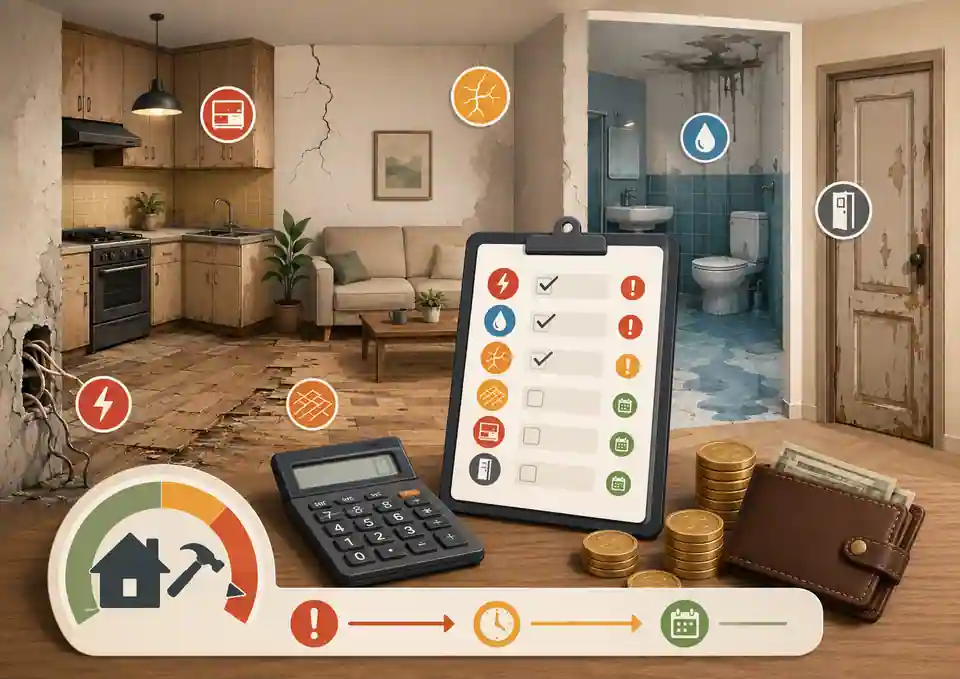
- prioritisation of essential and non-essential renovation work;
- the impact of poor planning or false savings;
- emergency reserve and contingency planning;
- better preparation for discussions with lenders and contractors.
What to calculate before buying a home
The advertised property price does not reflect the full financial requirement. Before making a decision, it is important to estimate the total amount needed for the purchase, mortgage repayments and post-purchase expenses such as repairs, moving and basic household setup.
Main costs when buying a home
| Cost category | What to include | Common mistake |
|---|---|---|
| Down payment | Initial payment from personal savings | Using all savings and leaving no financial reserve |
| Mortgage | Loan amount, interest, term and total repayment | Focusing only on monthly payment |
| Purchase costs | Legal fees, taxes, valuation and insurance | Ignoring extra transaction costs |
| Renovation | Repairs, materials, labour and preparation work | Assuming only cosmetic work is needed |
| Furniture & setup | Basic appliances and essential household items | Not including them in the budget |
| Financial buffer | Emergency funds after purchase | Spending all available money upfront |
Start your plan with a comfortable repayment level that still leaves enough room for living costs, savings and unexpected expenses.
A mortgage is more than a monthly payment
A mortgage should be evaluated as a full financial commitment, not just a monthly payment. Similar monthly repayments can hide very different total interest costs, loan structures and long-term obligations.
- Determine the total property price.
- Subtract your available down payment.
- Calculate the loan amount.
- Check interest rate and loan term.
- Estimate monthly repayment.
- Review total interest over the full term.
- Include all fees and insurance costs.
- Compare early repayment options.
- Ensure budget stability after payments.
Mortgage calculators provide estimates only. Final terms, interest rates and fees depend on the lender’s official agreement.
Renovation budget after buying a home
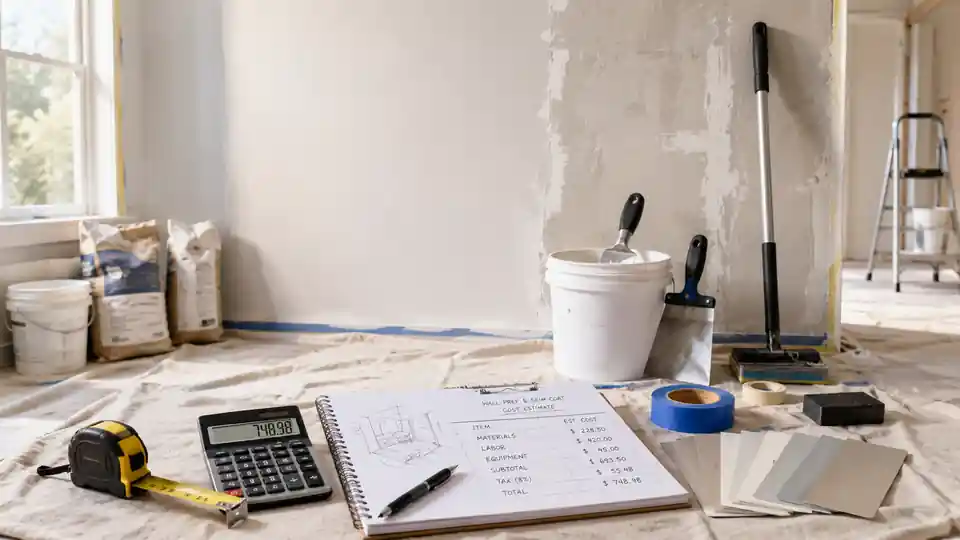
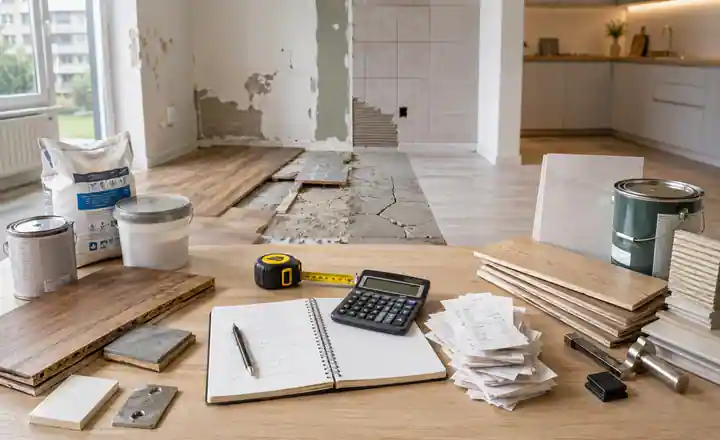
Renovation is often the second largest cost after purchasing a home. Even properties in good condition may require flooring, painting, electrical updates, plumbing work or room-level improvements.
It is important to separate renovation costs from the purchase price. This helps prioritise urgent repairs, delay non-essential upgrades and avoid overspending in the early stages.
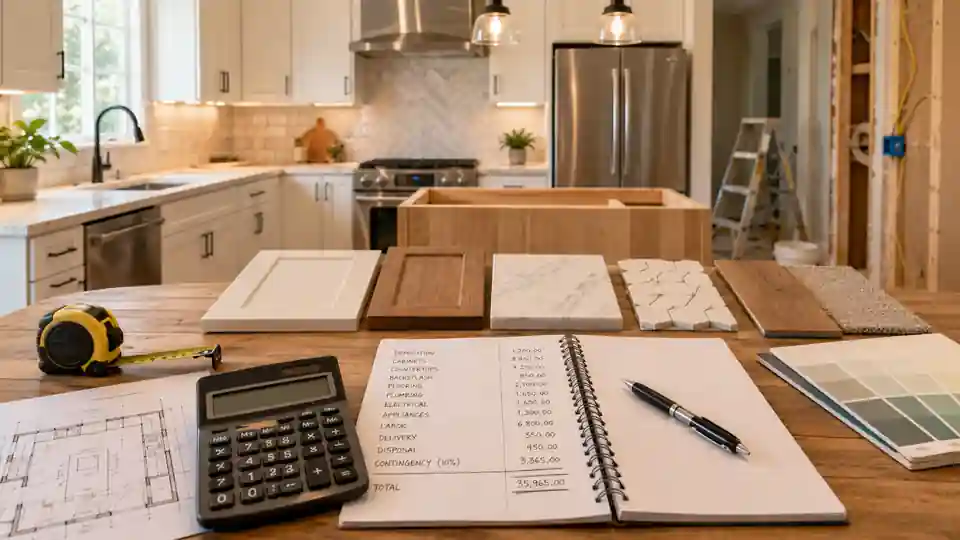
What makes up a renovation budget
| Category | Costs | Why costs increase |
|---|---|---|
| Preparation | Demolition, repair and surface preparation | Hidden defects appear after dismantling |
| Materials | Flooring, paint, tiles and adhesives | Extra supporting materials are often required |
| Labour | Electricians, plumbers and installers | Different pricing methods per trade |
| Delivery | Transport and waste removal | Often underestimated initially |
| Rework | Fixing or replacing mistakes | Poor planning increases total cost |
| Contingency | Emergency budget reserve | Unexpected issues during renovation |
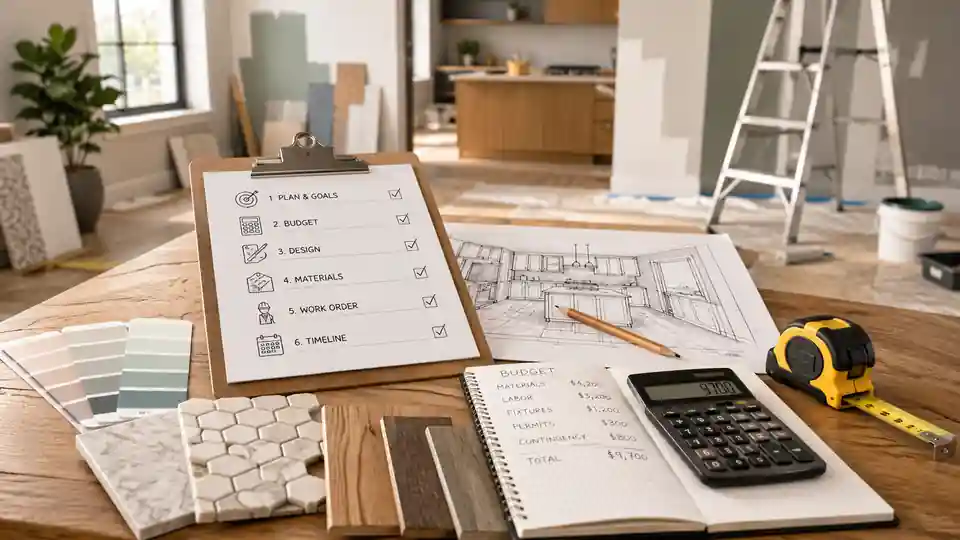
A good renovation budget separates materials, labour, delivery costs and contingency rather than using one single number.
Calculators for home buying and renovation planning
HomDera calculators break down complex financial decisions into smaller, clearer estimates. This helps you compare mortgage options and understand renovation costs before making commitments.
- mortgage calculator for repayment and interest estimates;
- room renovation calculator for full project budgeting;
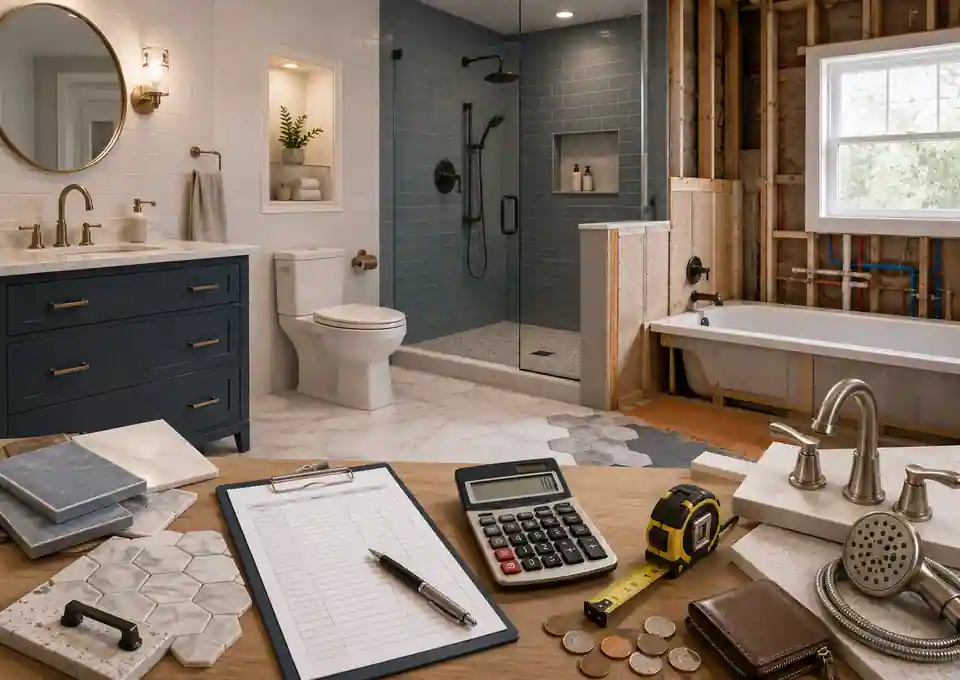
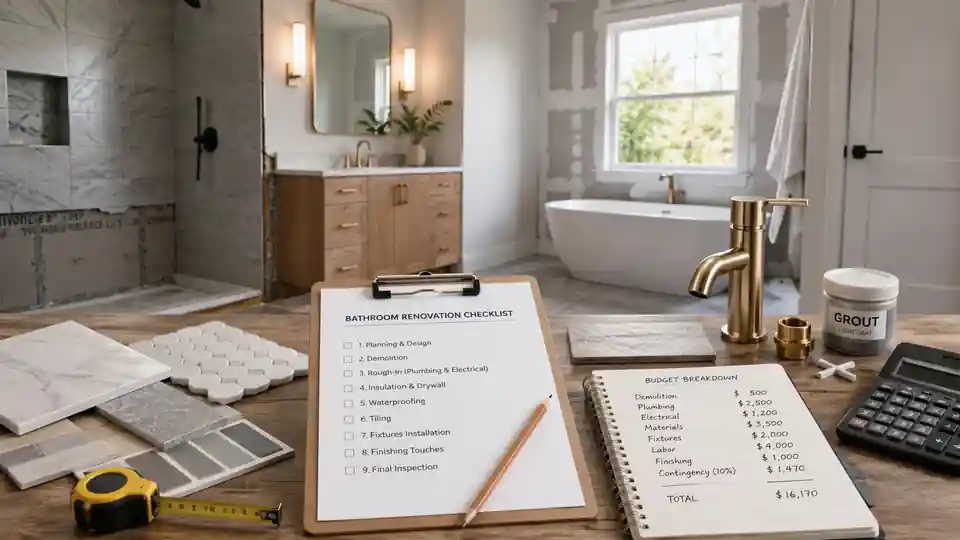
- bathroom renovation calculator for complex cost planning;
- renovation priority calculator for budget allocation;
- mistake cost calculator for comparing savings vs rework costs;
These calculations are estimates only and do not replace financial advice or official mortgage agreements.
How to build a realistic home finance plan
- Define available savings and income.
- Set aside emergency reserve funds.
- Estimate down payment and purchase costs.
- Choose a realistic mortgage level.
- Assess property condition.
- Divide renovation into stages.
- Separate materials and labour costs.
- Include delivery and extra expenses.
- Add contingency buffer.
- Compare multiple scenarios.
Financial buffer after buying a home
A financial buffer is essential after buying a home. Unexpected costs such as repairs, higher bills or appliance replacements can appear even in well-planned projects.
Leaving no reserve after a purchase increases financial risk and reduces flexibility for future decisions.
It is often safer to delay part of a renovation than to complete everything and run out of financial reserves.
Common mistakes in home financial planning
- focusing only on property price;
- ignoring total mortgage cost;
- spending all savings on purchase;
- not including hidden costs;
- underestimating renovation complexity;
- starting work without planning;
- not reserving emergency funds;
- failing to measure materials correctly;
- approving extra work without cost control;
- ignoring income stability risks;
A low property price does not always mean a good deal. Hidden structural or technical issues can significantly increase total ownership cost.
When professional advice is necessary
Online calculators are useful for planning, but final decisions should always be confirmed with qualified professionals.
- mortgage advisers;
- legal professionals;
- property inspectors;
- building contractors;
- electricians and plumbers;
- financial advisers;
Never sign a mortgage or purchase agreement based only on estimates.
Frequently asked questions
What costs should I include besides the property price?
Include mortgage, down payment, legal fees, taxes, renovation, furniture, moving costs and emergency reserve.
Is mortgage approval equal to affordability?
Approval does not guarantee long-term affordability. Real affordability depends on full household expenses.
How much contingency is needed?
It depends on property condition and renovation complexity. Older homes require larger reserves.
Should I spend all savings on a down payment?
No. Always keep an emergency reserve for unexpected expenses.
Can renovation start before full budgeting?
Yes, but work should be prioritised in stages, starting with safety-related tasks.
How HomDera calculates financial estimates