

What this renovation priority calculator does
The renovation priority calculator helps you decide where to begin when the available budget cannot cover every improvement at once. Instead of ranking projects by appearance alone, it considers safety, moisture, essential services, the condition of underlying surfaces and the order in which renovation work is normally completed.
- identifies problems that may need attention before decorative work begins;
- separates urgent repairs from improvements that can form a later stage;
- helps prevent the whole budget from being spent on visible but non-essential changes;
- highlights situations where new paint, wallpaper, flooring, doors or cabinets may be damaged by later work.
This approach is useful when several parts of a home need attention at the same time. You may have ageing wiring, poor bathroom ventilation, an uneven floor, worn wall finishes, an inconvenient kitchen and doors that look dated. The calculator helps separate technical problems from preferences about appearance.
The result is intended to provide a practical starting order. Once the main priority is clear, you can prepare a separate cost estimate for that stage, compare materials and obtain quotations from relevant professionals.
Read practical guides to renovation planning, budgeting and common mistakesInformation you need to enter
Enter the amount currently available for renovation and select the condition of six areas: wiring, bathroom, floor, walls, kitchen and doors. Choose the option that best describes the present condition rather than the result you would ideally like to achieve.
How each input affects the suggested priority
| Input | What to assess | Why it matters |
|---|---|---|
| Available budget | The amount that can realistically be spent during the current stage | A limited budget may be better used to complete one essential task properly instead of starting several unfinished projects |
| Wiring | Age, visible faults, tripping breakers, warm outlets, missing outlets and inconvenient circuit planning | Electrical work often requires access to walls and should normally be considered before final decorating or fitted furniture |
| Bathroom | Leaks, dampness, ventilation, mould, pipe condition and the reliability of plumbing fixtures | Unresolved water and moisture problems can damage finishes and create larger repair costs |
| Floor | Movement, soft spots, moisture, unevenness, squeaking and the condition of the subfloor | Floor height and condition can affect doors, skirting boards, cabinets and finished flooring |
| Walls | Cracks, dampness, loose plaster, uneven surfaces and whether only the finish is worn | Final wall finishes may need to be removed again if wiring, moisture or preparation work is postponed |
| Kitchen | Water, power, ventilation, layout, sink condition, cabinetry and space for appliances | A kitchen can consume a large part of the budget and should be planned around essential services before decorative choices |
| Doors | Whether the issue is mainly appearance or whether the doors and frames no longer work correctly | Door installation may depend on the final floor height and completion of disruptive work |
Describe the current condition honestly. Choosing a critical option simply because you dislike the appearance may push a cosmetic project ahead of a more important technical problem.
Why the most visible problem is not always the first priority
Fresh paint, new doors, updated cabinet fronts and modern flooring can change the appearance of a room quickly. However, these improvements do not correct unsafe wiring, active leaks, persistent moisture, poor ventilation or a failing subfloor.
Cosmetic renovation may appear cheaper at first, but it can become more expensive when unresolved technical problems require new finishes to be removed and replaced.
How renovation priorities are assessed
The calculator compares the reported condition of each area with its likely effect on safety, normal use and future renovation stages. A problem receives a higher priority when delaying it may increase damage, interfere with other work or make new decorative finishes short-lived.
- Potentially urgent issues involving electricity, water, moisture, ventilation or unstable surfaces are considered first.
- The calculator then checks which tasks may damage or invalidate future decorative work.
- Functional problems are separated from improvements that mainly change appearance.
- The suggested work is divided into tasks to address now, tasks for the next stage and tasks that can usually wait.
The available budget changes the way the result is presented, but it does not create a detailed quotation. Costs vary greatly by property, location, labour market, materials, access and the amount of hidden preparation required.
Which renovation tasks usually come first
The first stage will usually contain problems connected with safety, active water damage, severe moisture, unusable services or an unstable base. Examples include electrical faults, leaking pipes, persistent bathroom dampness, a failing subfloor or walls that are crumbling because the underlying cause has not been corrected.
These repairs may not create the most impressive visual change, but they provide a safer and more reliable base for everything that follows. Completing them first can reduce the risk of damaging new flooring, wall finishes, doors, furniture or kitchen units during a later stage.
Use a limited budget to complete the right first stage
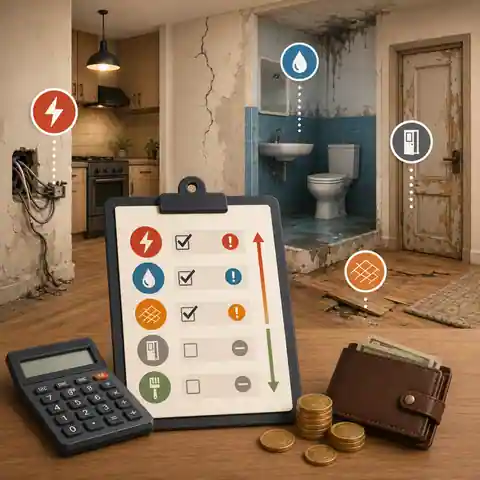
When the budget covers only part of the project, begin with the problem that creates the greatest risk or affects the largest number of later tasks.
Electrical faults, leaks, moisture and unstable floors usually deserve attention before decorative updates.
Paint, doors, cabinet fronts and other appearance-based improvements can often be postponed without increasing damage.
When cosmetic renovation may lead to wasted work
Decorative improvements make sense when the underlying surfaces and services are already in suitable condition. If new wallpaper covers walls that still require rewiring, or new flooring is installed over a damp or unstable base, the visible improvement may need to be removed long before the material itself wears out.
Examples of work that may be better postponed
| Planned improvement | Why postponing may help | What to check first |
|---|---|---|
| Painting or wallpapering walls with old wiring | New cable routes or additional outlets may require cutting into the finished walls | Wiring condition, circuit capacity, outlet positions and planned appliances |
| Refreshing a bathroom with active dampness | Paint, sealant or decorative panels will not remove the source of moisture | Leaks, pipework, waterproofing, ventilation and the source of condensation |
| Installing doors before the floor is finalised | A change in finished floor height can affect clearances, frames and door movement | Subfloor repairs, underlay, flooring thickness and thresholds |
| Installing a kitchen before planning services | Adding outlets, lighting, ventilation or water connections later can be disruptive and expensive | Appliance positions, electrical circuits, plumbing, extraction and working clearances |
How to read your result
Treat the result as a suggested sequence for further investigation, not as a diagnosis or a final renovation specification. It helps organise the project, but it cannot inspect hidden wiring, identify the source of moisture, assess structural movement or determine the actual condition of pipes and subfloors.
- “What to do now” contains the issues that are least suitable for postponement based on the selected conditions.
- “What to do next” contains important work that may follow after the main technical problems are controlled.
- “What can wait” usually contains appearance-based improvements or functional issues with a lower immediate impact.
- The cosmetic warning identifies areas where finishing work may need to be removed or repeated if underlying work is delayed.
When several critical items appear, you do not necessarily need to begin all of them at once. Investigate the highest-risk issue first, confirm its likely cost and complete a manageable stage properly.
Example renovation priority result
What might the calculator suggest if the budget is limited, the wiring is old, the bathroom has dampness, the floor is usable and the kitchen and doors mainly look dated?
Answer: The bathroom moisture problem and the wiring would normally receive the highest priority because they can affect safety and damage future finishes. The floor may form a later stage if there is no moisture, movement or serious instability. Kitchen appearance, door replacement and general decorating can usually wait until the technical problems have been investigated and the first-stage budget is clearer.
Explanation: With limited funds, the most useful first stage usually addresses problems that can cause damage, create safety concerns or force completed decorative work to be removed later.
Common mistakes when renovating on a limited budget
- decorating walls before deciding whether wiring or outlet positions need to change;
- spending most of the budget on kitchen finishes without checking electricity, plumbing and ventilation;
- ordering new doors before confirming the final floor construction and height;
- covering bathroom dampness without identifying the source;
- buying materials for several rooms before enough money is available to complete any one stage;
- choosing the cheapest visible solution without considering removal, preparation and future replacement costs;
- treating an online priority result as a substitute for an electrical, plumbing or building inspection.
What to calculate after choosing the first priority
After identifying the first stage, prepare a more detailed estimate for that specific task. Measure the relevant area, list supporting materials, obtain labour quotations and include delivery, disposal, preparation and contingency costs.
- for electrical work, list appliances, outlets, lighting and expected circuit loads before speaking with an electrician;
- for bathroom work, separate plumbing, ventilation, waterproofing, fixtures, surfaces and labour;
- for flooring, check the subfloor before calculating finish materials and pack quantities;
- for walls, confirm that moisture, wiring and loose surfaces have been addressed before estimating paint or wallpaper.
Important safety and planning limitations
The calculator uses the information you select and cannot verify whether a problem is more serious than it appears. Warm outlets, repeated breaker trips, burning smells, exposed conductors, active leaks, substantial mould growth, severe floor movement or crumbling surfaces should not be treated as ordinary decorating decisions.
Electrical faults, persistent leaks, significant moisture, gas equipment, suspected structural movement and other safety-critical problems should be inspected by an appropriately qualified professional before renovation work continues.
Frequently asked questions
Does the calculator estimate the cost of each repair?
No. The budget is used to describe the general level of available funds and support the suggested order of work. The calculator does not know local labour rates, material prices, room sizes, hidden damage or the technical scope of each repair.
Should electrical work always come first?
Not automatically. Wiring receives a high priority when there are signs of faults, insufficient capacity or planned changes that would damage finished walls. If the electrical system is in good condition, another issue such as an active leak or unstable floor may be more urgent.
Can I use the result to plan a staged renovation?
Yes. The result is most useful as a starting framework for a staged project. Confirm the first priority, estimate its real cost, complete the necessary preparation and then review the remaining budget before moving to the next stage.
What if every area is in poor condition?
Begin with professional inspections of the highest-risk systems rather than purchasing finishes. Electrical faults, water damage, moisture, ventilation and unstable surfaces may affect the scope and cost of several later tasks. An inspection can prevent the budget from being based on incorrect assumptions.
Final planning principle
When renovation funds are limited, prioritise the work that protects safety, prevents further damage and creates a reliable base for later improvements. Wiring, leaks, moisture, ventilation and unstable floors may deserve attention before wallpaper, new doors or decorative kitchen updates.
Use the calculator to organise the first decision, then confirm the actual condition, cost and technical requirements before ordering materials or authorising work.