




Plan the full cost of a home before committing to the purchase
The price shown in a property listing is only one part of the financial decision. A home purchase may also involve a deposit or down payment, mortgage repayments, legal and administrative fees, inspections, insurance, moving costs, renovation work, furniture, appliances and a reserve for expenses that are difficult to predict in advance.
This section brings together practical calculators for early home-buying and household budget planning. They can help you explore whether a property fits your available funds, estimate a possible mortgage payment, compare different deposit amounts and understand how much money may still be needed after the purchase for repairs, furnishing and moving in.
HomDera calculations are general planning estimates, not financial, legal, tax or lending advice. Mortgage products, eligibility rules, purchase fees and renovation costs vary by country, lender and property. Always confirm the actual figures with the relevant lender and qualified local professionals.
Choose the right calculator for your home-buying decision
Home planning and budget calculators on HomDera
| What you need to estimate | Calculator to use | What the result can show |
|---|---|---|
| A possible monthly home loan payment | Mortgage calculator | Estimated repayment, loan amount, interest cost and total amount repaid |
| How much cash may be required at the beginning | Deposit or down payment calculator | Your upfront contribution, estimated loan amount and initial funding requirement |
| The purchase together with renovation and move-in costs | Total home cost calculator | Estimated property price, renovation budget, additional expenses and contingency reserve |
Why the full cost of buying a home matters
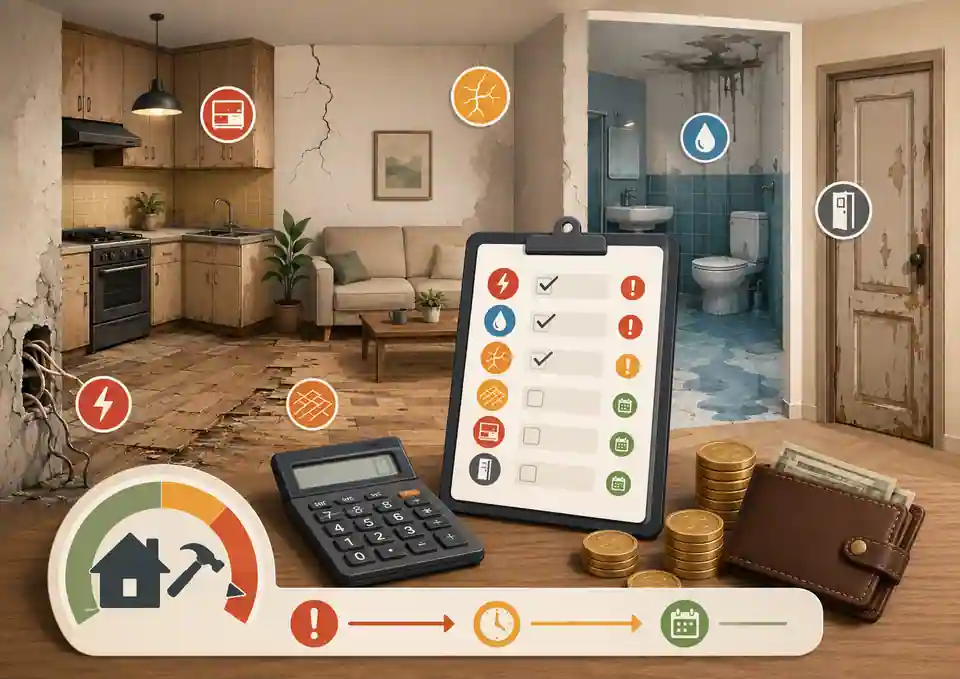
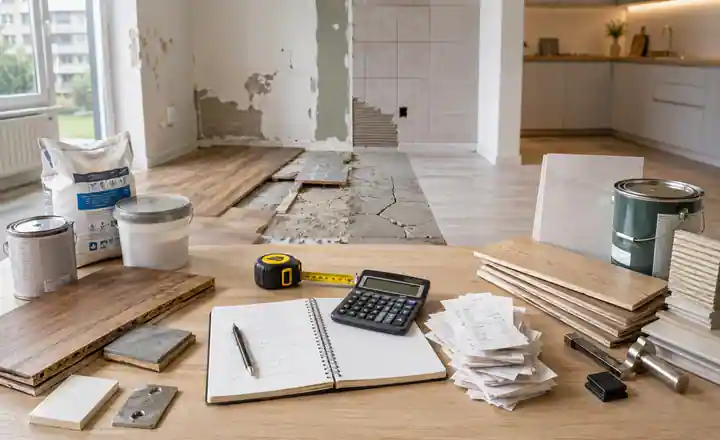
A common planning mistake is to focus only on the purchase price. The property may also need new flooring, wall finishes, electrical upgrades, plumbing work, heating improvements, furniture or major appliances. Even smaller items such as delivery, waste removal, tools, fittings and moving services can add a noticeable amount to the final budget.
A broader calculation provides a more realistic view of the money required to complete the purchase and make the home usable. It can help you see whether your savings are sufficient, whether the estimated monthly repayment leaves enough room for normal household expenses and how much should remain available for work after completion.
- explore whether a property is reasonably aligned with your household budget;
- estimate a possible monthly mortgage repayment;
- compare different deposit or down payment amounts;
- include renovation, furnishing, moving and contingency costs;
- compare several properties using more than the listing price alone;
- prepare clearer questions for a lender, mortgage adviser, estate agent or property developer.
Run more than one scenario. A useful plan should include not only the expected outcome, but also a less comfortable case in which renovation costs rise, interest rates change, income falls temporarily or an additional expense appears.
Information to collect before estimating your budget
The calculator does not require every future expense to be known exactly. However, realistic starting figures produce a much more useful estimate than optimistic guesses. Gather the main numbers before comparing properties or discussing a loan.
- the expected purchase price of the apartment, house or other property;
- the amount available for a deposit or down payment;
- the proposed mortgage term;
- the expected interest rate and loan structure;
- estimated legal, inspection, valuation, insurance and purchase-related fees;
- the renovation and furnishing budget after completion;
- regular household income, debt repayments and essential monthly expenses;
- a separate contingency reserve.
Mortgage, renovation and contingency should be planned together
The mortgage calculation describes the likely commitment to the lender. The renovation budget shows how much may be needed to make the property suitable for everyday living. The contingency reserve provides protection when materials, labour or other costs turn out to be higher than expected. Looking at only one of these areas can hide the true pressure on the household budget.
That is why home-planning calculators can be useful before arranging viewings, making an offer or submitting a mortgage application. They allow you to test different price ranges early and focus on properties that are more realistic after the full set of costs is considered.
Common mistakes when planning a home purchase
- using the listing price as the entire purchase budget;
- putting nearly all available savings into the deposit or down payment;
- ignoring legal fees, inspections, insurance, taxes or other local purchase costs;
- calculating the monthly mortgage repayment without normal household expenses;
- underestimating renovation, furniture, appliances and moving costs;
- choosing the largest available loan without allowing room for changes in income or expenses;
- comparing properties by purchase price instead of total cost and condition.
A difficult monthly repayment does not always mean that home ownership is completely out of reach. The plan may improve by considering a lower purchase price, increasing the upfront contribution, reducing the initial renovation scope or changing the loan term. Each adjustment should be reviewed carefully because a lower monthly payment can still lead to a higher total interest cost.
How to use the home planning calculators
- Enter the approximate price of the property you are considering.
- Add the amount available for the deposit or down payment.
- Enter the proposed loan amount, term and interest rate.
- Include purchase fees, renovation, furniture, appliances, moving and contingency.
- Compare several scenarios with different property prices, upfront contributions and loan terms.
- Review whether the remaining monthly budget still covers essential living costs and savings.
- Use the result as a starting point for discussions with lenders and qualified local advisers.
HomDera does not assess mortgage eligibility, creditworthiness or the likelihood of loan approval. Calculator results do not guarantee that a lender will offer the same rate, term, payment schedule or loan amount. Review all official documents and obtain professional advice before signing an agreement.
When the budget should be recalculated
- the property price or expected deposit changes;
- a lender provides a different interest rate, repayment structure or loan term;
- an inspection reveals repairs that were not included in the first estimate;
- a new contractor quote changes the renovation budget;
- furniture, appliances, legal fees or moving costs need to be added;
- household income, existing debt or regular expenses change;
- you begin comparing a different property, neighbourhood or type of home.
A home-buying budget is not a calculation that should be completed once and forgotten. Update it whenever the property, loan offer, renovation scope or household finances change. Recalculating helps keep the decision connected to current figures rather than to the first estimate or the excitement of finding a property.
How HomDera prepares financial estimates and why calculator results are approximate