


Plan backup power before the first long outage
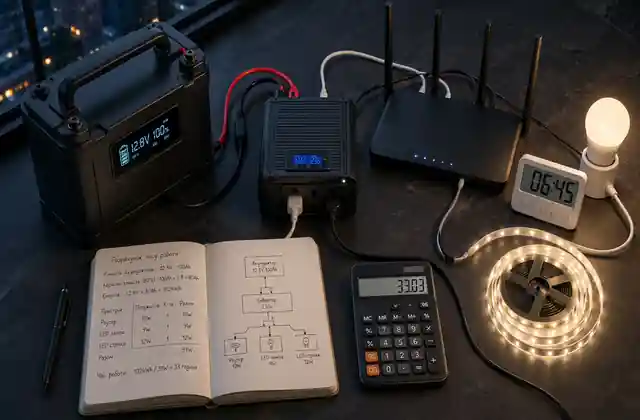
A short power cut may be manageable with a power bank and a torch. Longer outages are different. If a boiler or heating system, internet router, lights, computer, circulation pump or refrigerator must continue operating, choosing an unspecified battery is unlikely to be enough. You need to understand the connected load, usable battery capacity, inverter rating, system losses and realistic operating time.
This section brings together practical calculators for household backup power, including batteries, UPS systems, inverters, boiler backup, apartment or home loads, and solar panels. They are not intended to design a complete electrical system without professional input. Their purpose is to provide a realistic starting point: how much energy you may need, how long the reserve could last and whether the planned system fits the available budget.
HomDera calculations are preliminary estimates. Batteries, UPS units, inverters, solar panels, boilers, generators and permanent backup power systems should be connected by a qualified professional using correctly sized cables, protective devices, grounding and an appropriate transfer arrangement.
Choosing the right backup power calculator
Battery, UPS, inverter and solar panel calculators
| What you need to estimate | Recommended calculator | What the result shows |
|---|---|---|
| How long a battery can support a particular load | Battery runtime calculator | Estimated runtime based on battery capacity, system voltage, inverter efficiency and permitted depth of discharge |
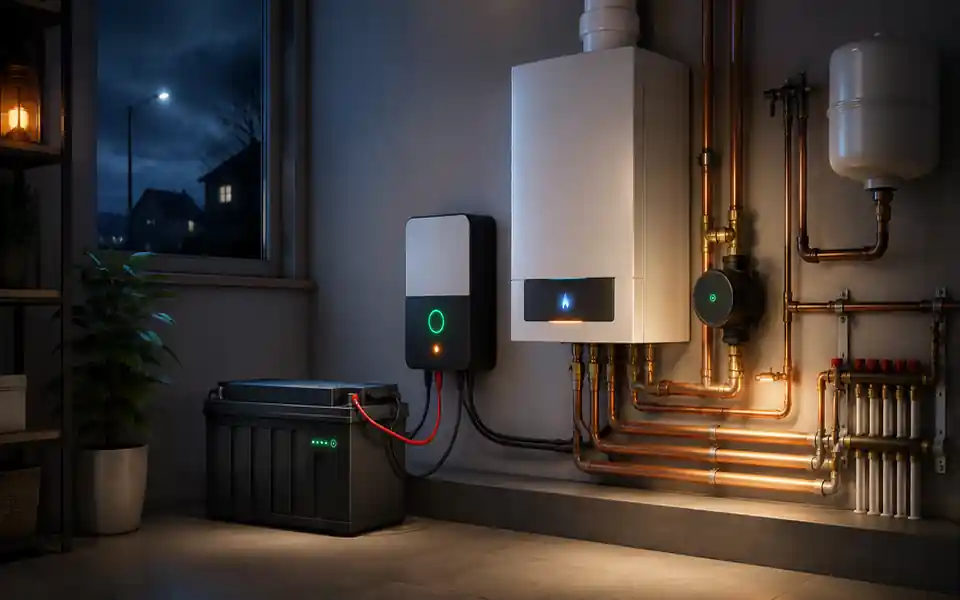
| Backup power for a gas boiler, circulation pump or heating controls | Boiler battery calculator | An initial battery capacity, UPS or inverter rating, and expected heating-system runtime |
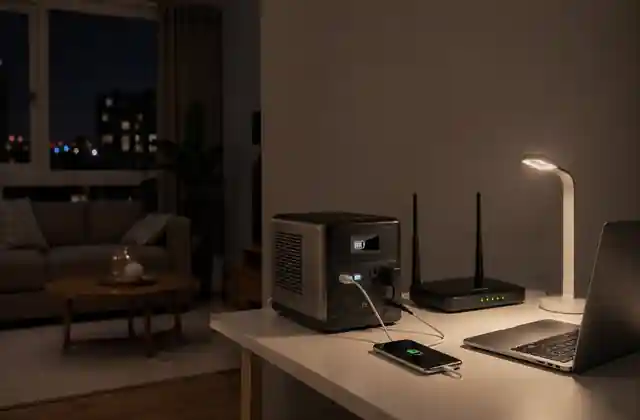
| Power for a router, lights, computer or several essential devices | Home UPS calculator | Combined load, approximate battery requirement and expected backup time |
| A solar array for a home, cabin or backup power system | Home solar panel calculator | Approximate panel count, solar array capacity, daily and monthly generation, battery reserve and estimated panel cost |
Why a 100 Ah battery does not guarantee many hours of runtime
A larger amp-hour rating usually means more stored energy, but amp-hours alone do not determine runtime. System voltage, usable depth of discharge, inverter efficiency and the power consumed by the connected equipment all affect the result. The same battery can therefore perform very differently when supplying a router, boiler, refrigerator or electric heater.
A router and a few efficient lights may run for a considerable time, while a space heater or high-powered kettle can use the same energy reserve very quickly. Before buying equipment, calculate both the battery capacity and the actual load in watts.
Why backup power must be calculated as a complete system
A reliable backup setup is more than a battery in a box. The design must consider appliance wattage, starting surges, battery capacity, system voltage, inverter efficiency, charging equipment, cable size, circuit protection, ventilation, installation conditions and the method used to transfer between grid and backup power.
Adding solar panels introduces further variables, including season, shading, roof orientation, panel angle, controller and inverter losses, daytime consumption and whether enough solar energy will be available when the battery needs charging. The calculators therefore provide a useful range and order of magnitude rather than a finished system design.
- battery capacity in amp-hours must be considered together with the system voltage to estimate stored energy;
- an inverter consumes part of the available energy during conversion, reducing practical runtime;
- LiFePO4, AGM, gel and conventional lead-acid batteries have different recommended discharge limits;
- motors, pumps, compressors and some appliances can draw much more power when starting;
- solar production changes with weather, season, panel angle, orientation, shading and system losses;
- higher loads discharge a battery faster and may require a larger inverter, cables and protective devices.
For an initial estimate, identify the devices that must remain powered, their wattage and the number of backup hours required. Before purchasing or installing the system, confirm the result against the specifications of the actual equipment and the proposed wiring arrangement.
Information to prepare before calculating a battery or UPS
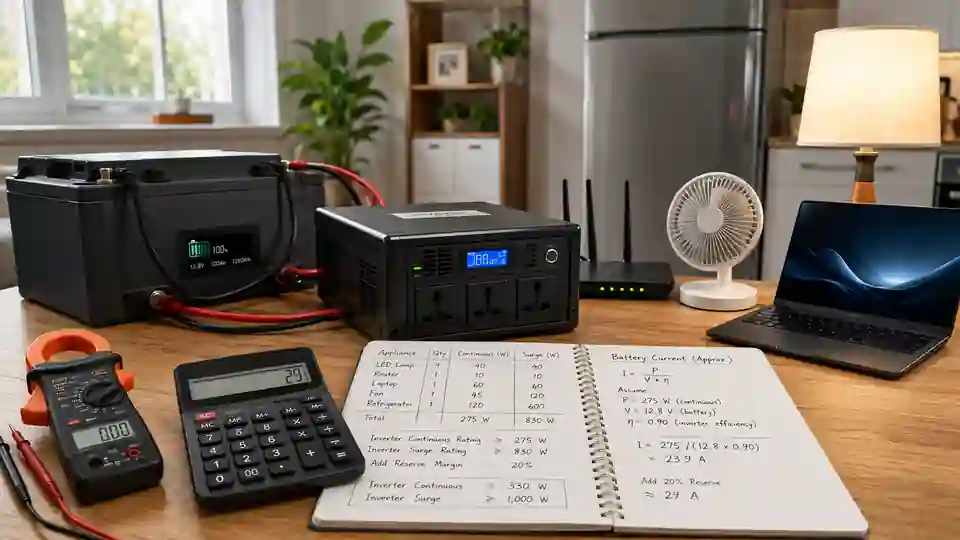
Begin with a list of the equipment that genuinely needs to operate during an outage rather than every appliance in the property. The essential group may include a boiler or heating pump, router, lighting, computer, chargers, refrigerator or a limited number of critical outlets.
- a list of devices that must be supplied by the backup system;
- the rated power of each device in watts, taken from its label, manual or specification sheet;
- the required backup period, such as 2, 4, 8 hours or longer;
- the planned system voltage, commonly 12 V, 24 V or 48 V;
- the battery chemistry, such as AGM, gel, LiFePO4 or conventional lead-acid;
- the efficiency of the inverter or UPS, where this information is available;
- whether the system will power individual devices, a dedicated outlet circuit or part of the main electrical panel.
Do not connect an inverter, UPS or battery to household wiring through improvised cables or unsafe transfer arrangements. Incorrect connections can endanger occupants, equipment, utility workers and the electrical network.
Batteries, UPS systems, inverters and solar panels have different roles
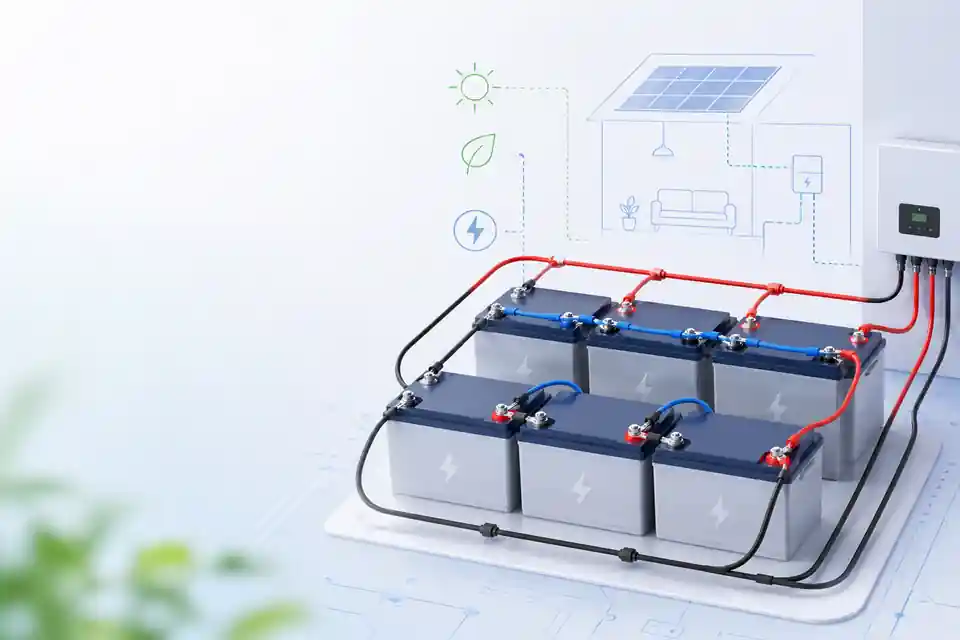
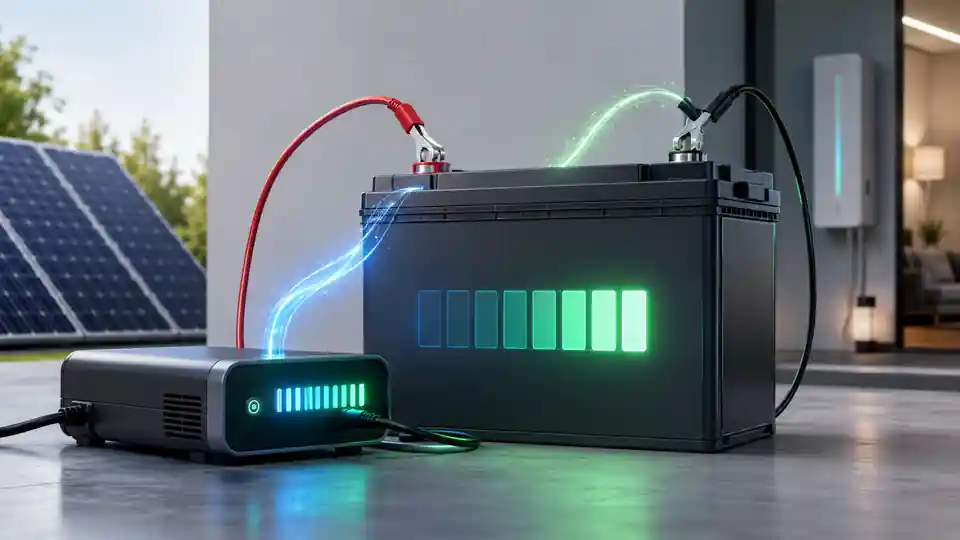
A battery stores energy but does not perform every function required by a backup system. An inverter converts battery power into electricity suitable for household devices. A UPS can switch automatically when grid power fails. Solar panels can produce energy during daylight and recharge the system, but their output varies throughout the day and across the year.
For this reason, a system should not be selected using one attractive specification. A large battery paired with an unsuitable inverter may not support the required load. A high-powered inverter connected to a small battery may provide only a short runtime. Solar panels without suitable charging equipment, protection and system design do not create a safe or dependable installation.
The role of each backup power component
| Component | Primary function | What to check |
|---|---|---|
| Battery | Stores energy and determines much of the available backup time | Capacity, voltage, chemistry, permitted depth of discharge, and charge and discharge current limits |
| Inverter | Converts stored DC energy into power for household equipment | Continuous and surge rating, output waveform, efficiency and compatibility with connected devices |
| UPS | Provides automatic backup when grid power is interrupted | Power rating, transfer time, output waveform, charging capability and support for external batteries |
| Solar panels | Generate energy during daylight and can recharge the system | Array capacity, shading, orientation, panel angle, seasonal output, controller compatibility and losses |
| Cables and protection | Allow the system to operate safely under the expected voltage and current | Cable size, breakers, fuses, disconnects, grounding, connection quality and installation conditions |
What is practical to power during an outage
One of the most common mistakes is expecting a battery system to behave like an unlimited wall outlet. A more efficient approach is to create an essential-load plan: heating controls or a circulation pump, internet access, a few lights, a computer, chargers and, where required, a refrigerator. Removing non-essential loads can increase backup time considerably.
Typical household backup power scenarios
| Scenario | Typical equipment | Planning consideration |
|---|---|---|
| Basic emergency backup | Router, device chargers and one or two efficient lights | A small load can provide a relatively long runtime from a compact system |
| Work-from-home backup | Router, laptop, monitor and lighting | Add the total wattage and define the required working time |
| Heating-system backup | Gas boiler, circulation pump and controls | The UPS or inverter must be electrically compatible with the heating equipment |
| Apartment or home essentials | Router, lights, computer, refrigerator and selected critical devices | Avoid operating every connected appliance at the same time |
| Solar-supported backup | Part of the daytime load together with battery charging | Available generation depends on season, weather, shading and installation quality |
Common backup power planning mistakes
Many problems begin during equipment selection rather than installation. It is easy to focus on a large amp-hour figure, choose an inverter with an impressive power rating or buy as many panels as the available space allows without checking how the complete system will operate. The result may run for less time than expected, fail to start certain equipment or require costly changes.
- using the battery's amp-hour rating without considering system voltage;
- ignoring inverter efficiency and other conversion losses;
- discharging a battery more deeply than recommended for its chemistry;
- planning to operate too many devices at the same time;
- selecting an inverter without checking its surge rating and output waveform;
- overlooking starting currents from refrigerators, pumps and motor-driven equipment;
- expecting the same solar production in summer, winter, cloudy weather and partial shade;
- reducing costs by using undersized cables or inadequate breakers, fuses, grounding and transfer equipment.
Professional design is especially important when the system will supply a boiler, pump, dedicated outlet circuit or main electrical panel. The issue is not only convenience during an outage, but also fire prevention, protection from electric shock and reliable operation of the connected equipment.
How to use the backup power calculators
- Identify the equipment that must remain operational during an outage, such as a boiler, router, lights, computer, refrigerator, pump or selected essential devices.
- Find the rated power of each device in watts on its label, manual or product specification.
- Decide how many hours of backup operation you require.
- For battery calculations, enter the system voltage, battery capacity, inverter efficiency and permitted depth of discharge.
- For solar calculations, enter daily energy use, the share to be covered by solar, effective peak-sun hours and the rated power of one panel.
- Compare the estimate with the specifications of the actual UPS, inverter, charger, battery and solar equipment being considered.
- Ask a qualified professional to review the equipment and installation plan before purchase or connection.
How batteries, inverters and solar panels work together
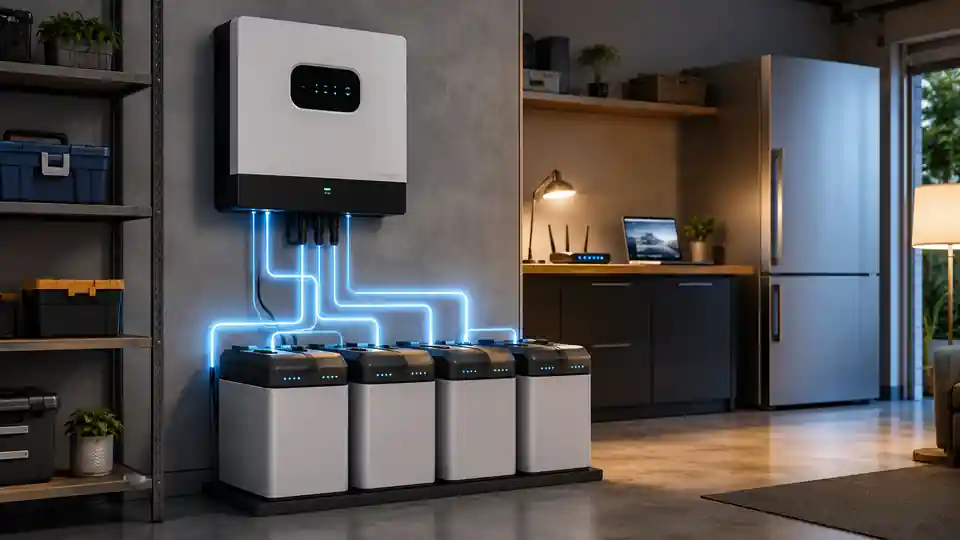
In a basic backup system, the battery supplies energy through an inverter or UPS and is recharged when grid power returns. A hybrid setup can also include solar panels that support daytime loads, recharge the battery or perform both functions depending on system design and available sunlight.
For example, a battery may support a heating system and router overnight, while solar panels replenish part of the stored energy during the day. Reliable operation still depends on more than panel count. The inverter, charge controller, cables, breakers, fuses, grounding and transfer arrangement must all be suitable for the system.
- the battery determines stored energy and contributes directly to backup duration;
- the inverter determines which loads and starting surges the system can support;
- a UPS can provide automatic transfer when grid power fails;
- solar panels affect daytime generation and the ability to recharge the battery;
- cables and protective devices must be selected for the system voltage, current and installation conditions;
- real performance varies with season, load profile, equipment efficiency and user behaviour.
HomDera content and calculators are not an electrical design, installation guide or recommendation of specific equipment. All results are approximate. Safe equipment selection, connection and operation must be confirmed by the user and the qualified professional carrying out the work.
When an electrician or solar specialist is essential
- an inverter or UPS will be connected to the electrical panel of an apartment or house;
- the backup system will supply a gas boiler, pump, dedicated circuit or group of outlets;
- cables, breakers, fuses, residual-current protection, relays, grounding or transfer equipment must be selected;
- the installation must switch between grid power, batteries, a generator or solar energy;
- solar panels will be mounted on a roof, wall or freestanding structure;
- the project involves high DC voltage from a solar array;
- there are concerns about system power, cable heating, surge loads, protection or equipment compatibility;
- the system will power part of a property rather than one independent device.
The calculators can make a professional consultation more productive because you will already have an approximate load, required backup time, battery capacity or solar panel count. The final equipment choice, wiring design and safety measures should still be decided after the actual installation conditions have been assessed.
How HomDera estimates backup power and why calculator results are preliminary