

Calculate your walls before ordering wallpaper, paint or tiles
Measuring the perimeter of a room may seem like enough, but real walls include doors, windows, alcoves, pipes, boxed-in sections, corners and areas that will not be painted or covered. These details can make estimating wall materials more complicated than the first measurement suggests.
This section brings together practical calculators for wallpaper, wall paint and wall tiles. They help you move beyond the total surface area and estimate the number of rolls, paint containers, individual tiles or packs you may need. This makes it easier to compare finishes, prepare a budget and avoid ordering materials based on guesswork.
HomDera calculations provide an initial planning estimate. Before placing a final order, check your measurements, the product specifications and the manufacturer’s guidance, particularly when the walls are uneven or the chosen finish is expensive.
Choosing the right wall calculator
Wall material calculators
| Your project | Recommended calculator | What it estimates |
|---|---|---|
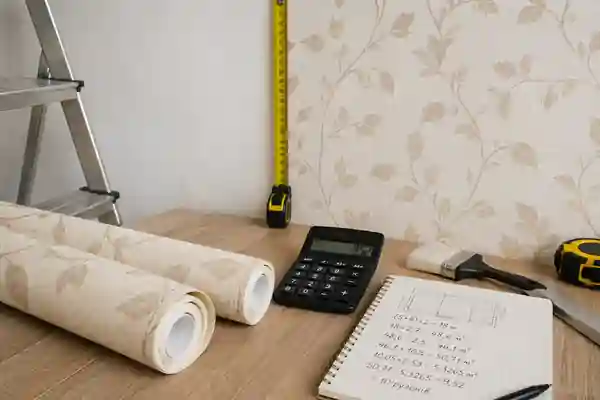
| Hanging wallpaper in a room, hallway or several connected spaces | Wallpaper calculator | Wall area, door and window deductions, and the approximate number of rolls |
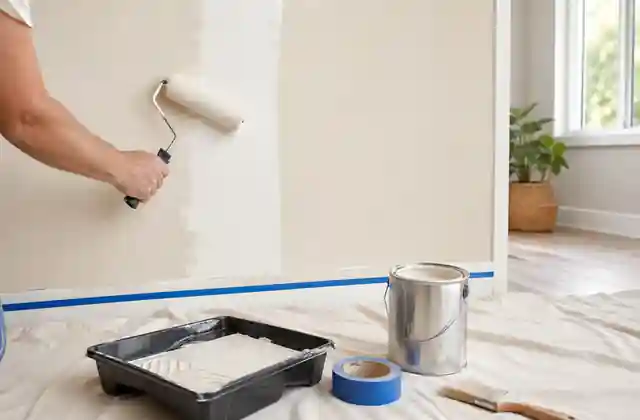
| Painting walls or refreshing the interior | Wall paint calculator | Paintable area, number of coats, product coverage and the approximate amount of paint |
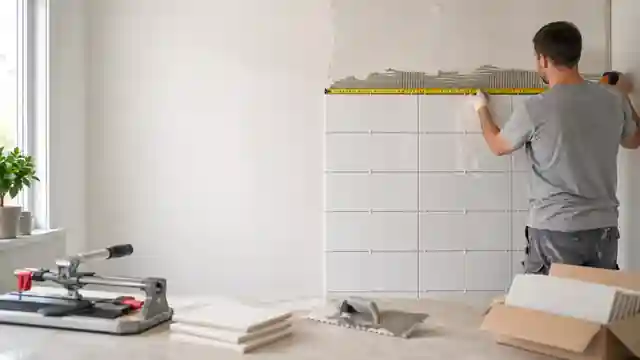
| Tiling a bathroom, kitchen wall, shower area or other vertical surface | Wall tile calculator | Tiled area, tile dimensions, waste allowance, and the number of tiles and packs |
Why wall area alone does not tell you how much material to buy
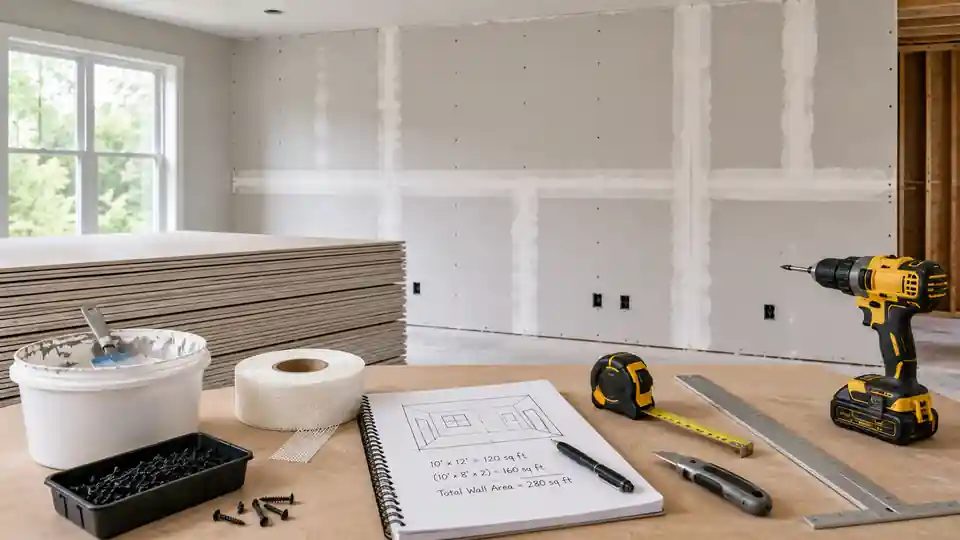
Consider a room with four walls, a height of 2.6 metres, one door and one window. For paint, you need the net wall area, the number of coats and the stated coverage per square metre. For wallpaper, the roll width, usable drop length and pattern repeat may matter more than the printed roll area. For tiles, you also need to consider tile dimensions, joints, cuts around corners and openings, and a sensible waste allowance.
The same wall therefore produces different purchasing requirements for paint, wallpaper and tiles. A suitable calculator applies the logic of the actual material rather than reducing every project to a single surface-area figure.
Information to prepare before calculating
For an estimate that is closer to a real order, prepare both the room measurements and the product information. This is particularly helpful when you have already selected a specific wallpaper, paint or tile.
- the length of each wall and the height of the room;
- the dimensions of doors, windows, large alcoves and any sections that will not be finished;
- for wallpaper — roll width, roll length and pattern repeat where applicable;
- for paint — coverage per square metre, number of coats and container volume;
- for tiles — tile dimensions, pack coverage or the number of tiles in each pack;
- a suitable allowance for cuts, pattern matching, joints, extra coats, breakage and possible defects.
Keep a photograph of the product label or the manufacturer’s specification page nearby. It normally includes paint coverage, roll dimensions, tile pack coverage and other information that can make the result much more useful.
Details that can change a wall material estimate
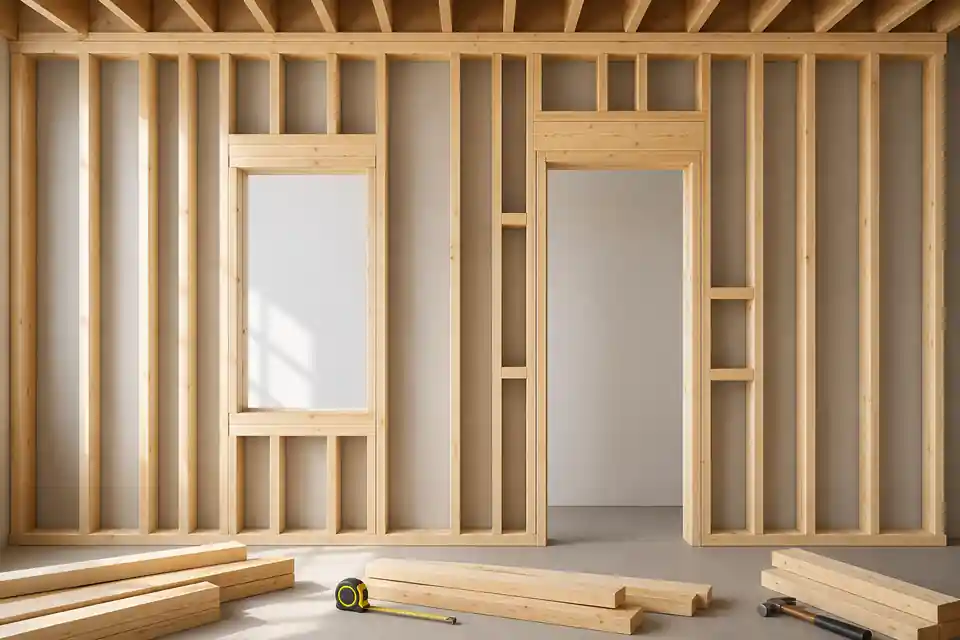
A wall material estimate depends on more than room length, width and height. Doors, windows, recesses, projections, service pipes, boxed sections, corners, surface condition, paint coats, wallpaper pattern matching and tile cuts can all affect the final quantity.
Ignoring these details may leave you searching for one more roll, another paint container or a few matching tiles from the same production batch. Ordering far too much creates the opposite problem: unnecessary spending and leftover material that may not be returnable.
- wallpaper estimates depend on room height, roll width, roll length and pattern repeat;
- paint estimates require the net wall area, number of coats, existing surface shade and product coverage;
- tile estimates depend on tile dimensions, the area being covered, joints, cuts and waste allowance;
- large doors and windows can be deducted when they occupy a meaningful part of the wall;
- for irregular rooms, calculating each wall separately is usually more reliable than using one perimeter measurement.
Before ordering, check both the wall measurements and the material specifications, including wallpaper roll dimensions, paint coverage and the number or area of tiles supplied in each pack.
Wallpaper, paint and tiles require different calculations
Wallpaper cannot be estimated accurately from wall area alone. A roll is cut into full-height drops, and patterned wallpaper may require additional length so each drop aligns correctly. As a result, two rolls with a similar printed coverage area may produce a different number of usable drops in the same room.
Paint follows a different set of rules. The main factors are the paintable area, number of coats, stated coverage and surface condition. Applying a light colour over a smooth pale wall is not the same as covering a dark, stained or highly absorbent surface.
Wall tiles are calculated in a way that resembles floor tiles, but vertical surfaces often introduce more detailed cuts. Shower areas, kitchen worktop walls, service boxes, concealed-installation panels and corners may require many smaller pieces. It is therefore useful to estimate the number of tiles and packs as well as the total square area.
The main factors for each wall finish
| Material | Key information | Common estimating mistake |
|---|---|---|
| Wallpaper | Roll width, roll length, room height and pattern repeat | Using only the printed coverage area and ignoring the number of usable drops |
| Paint | Wall area, number of coats, coverage and surface condition | Choosing one container by eye and forgetting that a second coat may be required |
| Wall tiles | Tile dimensions, covered area, joints, cuts and waste allowance | Forgetting corners, openings, boxed sections and spare tiles for damage or future repairs |
Why a material allowance matters
Most wall finishes need some additional material. Wallpaper is trimmed at the top and bottom, while patterned designs require extra length for matching. Paint may need two or more coats, and rough, dark or absorbent surfaces can use more product than expected. Tiles need an allowance for cuts, corners, openings, breakage and possible future replacement.
A modest allowance is usually less expensive than stopping the project because the material has run out. A missing wallpaper roll or several tiles can become a serious problem when the original production batch is no longer available. Even products with the same name may show slight differences in shade, texture or pattern between batches.
Common wall calculation mistakes
Most estimating errors come from rushing rather than from difficult mathematics. It is easy to multiply the room perimeter by the wall height and assume the job is complete. A real material order must also consider openings, pack sizes, waste, coats, patterns and the installation requirements of each finish.
- combining every wall into one figure without checking individual sections;
- forgetting to deduct large doors, windows or open areas that will not be finished;
- leaving out an allowance for cuts, joints, pattern matching, defects or future repairs;
- ignoring the number of coats and the condition of the surface when estimating paint;
- overlooking wallpaper pattern repeat and the actual number of full-height drops from each roll;
- failing to check tile pack coverage, production batch and the extra material needed for complex areas.
Existing homes are rarely made up of perfectly straight, empty rectangles. Pipes, boxed services, uneven corners and irregular walls deserve a closer look. An extra ten minutes with a tape measure can prevent a much more expensive attempt to correct an order based on rough estimates.
How to use the wall calculators
- Measure the length of each wall and the height of the room.
- Record the dimensions of doors, windows, large recesses and sections that will not be covered.
- Choose the relevant calculator for wallpaper, paint or wall tiles.
- Enter the product details, such as roll dimensions, paint coverage, tile size or pack coverage.
- Add an appropriate allowance for cutting, coats, joints, pattern matching, breakage and possible defects.
- Before ordering, compare the result with the product specifications and manufacturer’s recommendations.
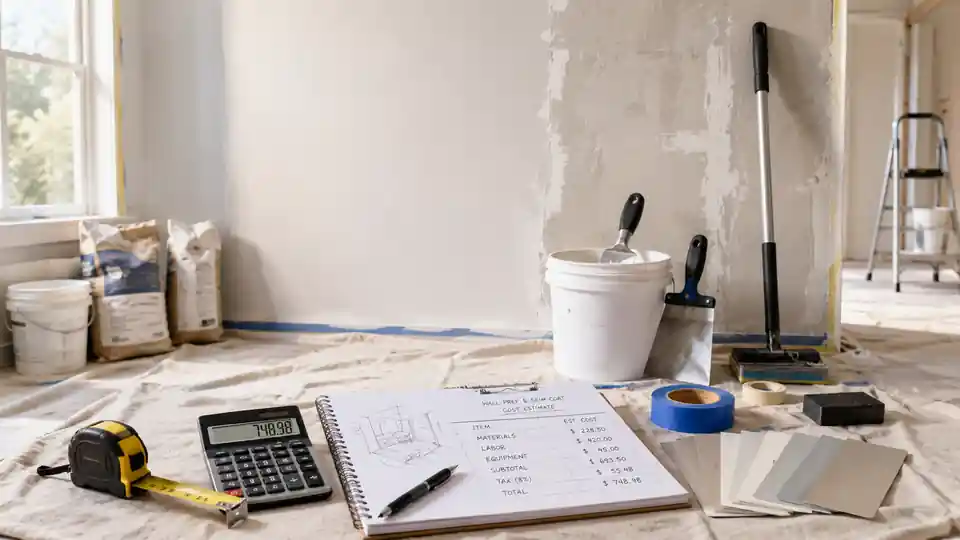
Calculator results are approximate. The quantity of wallpaper, paint or tiles actually required depends on measurement accuracy, wall condition, application or installation method, product coverage, cutting, defects, pattern matching, joints and the quality of the work.
When a professional estimate is worth considering
- the walls are uneven or contain many alcoves, projections, boxed sections or difficult corners;
- the tile layout includes decorative sections, borders, mosaics or a detailed pattern;
- the wallpaper has a large design that must align precisely between drops;
- paint will be applied over a dark, rough, damaged or highly absorbent surface;
- the selected material is expensive, uncommon or difficult to reorder from the same batch;
- different parts of the room will use paint, wallpaper and tiles within one combined design.
A calculator can provide a useful starting point, but the final order should still reflect the actual room, product and installation method. A second check is particularly valuable for patterned wallpaper, costly paint, detailed tile layouts and rooms with irregular geometry.
How HomDera estimates material quantities and why calculator results are preliminary