




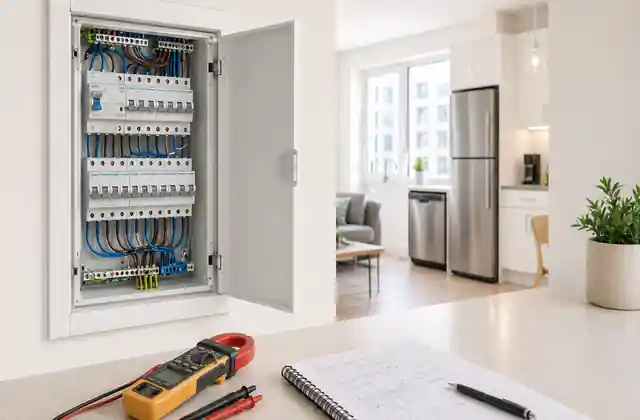
Check the electrical load before the circuit breaker starts tripping
A home electrical system may operate without obvious problems for years until several new appliances are added. A water heater, oven, air conditioner, portable heater, washing machine, inverter or UPS may seem manageable on its own, but running several high-power devices together can place significant demand on the wiring, sockets and circuit breakers.
This section includes calculators for preliminary household electrical estimates. They can help you add up appliance power, convert the total into an approximate current in amps, review the likely load on a home supply and explore basic cable-line parameters. Their purpose is not to guide a DIY installation, but to help you understand the figures before speaking with a qualified electrician.
Important: HomDera calculations are not installation instructions and must not be used as the sole basis for choosing wiring, circuit breakers, cable sizes, residual-current protection, voltage protection, electrical panels or backup power equipment. Electrical work should be designed, checked and completed by a suitably qualified professional in accordance with local requirements.
Choosing the right electrical calculator
Electrical calculators available on HomDera
| What you need to estimate | Recommended calculator | What the result shows |
|---|---|---|
| The combined demand created by appliances in a home | Home electrical load calculator | Total connected power, approximate current in amps and the load compared with the main circuit breaker rating |
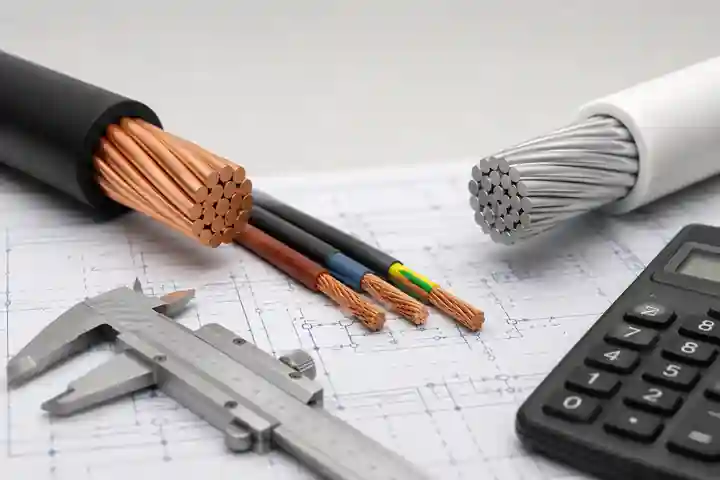
| A preliminary cable estimate based on power, current, voltage and line length | Cable size calculator | An estimated required conductor size and a nearby standard size, including a voltage-drop check |
Why a circuit breaker may trip only occasionally
A common situation is that the kettle works normally, the water heater works normally, the washing machine works normally and the microwave works normally. The problem appears only when several of them operate at the same time. In that case, the issue may not be one particular appliance but the combined demand placed on a circuit or on the whole electrical supply.
A load calculator makes this combined demand easier to see. A kettle, water heater, portable heater and washing machine can together draw far more power than expected from everyday observation. Once the figures are visible, it becomes easier to identify appliances that should not share the same operating period and to prepare more specific questions for an electrician.
Why household electrical load is worth calculating
Electrical load is not merely a technical figure. In daily life, excessive or poorly distributed demand may appear as a warm extension lead, a discoloured socket, a tripping breaker, noticeable voltage drop or an inability to operate several powerful appliances together. The warning sign may be obvious even when the group of devices causing it is not.
A preliminary calculation cannot assess the physical condition of the installation, but it can organise the basic information. You can see the approximate demand of each appliance, identify the largest loads and consider whether simultaneous operation may be contributing to an overload.
- estimate the combined power demand of household appliances;
- identify which devices place the greatest demand on the electrical supply;
- convert power into an approximate current in amps;
- review the potential for overload when several appliances operate together;
- prepare practical questions before rewiring, upgrading an electrical panel or adding dedicated circuits.
Use the rated power shown on the appliance label, technical sheet or instruction manual rather than relying on a rough guess. Accurate values are particularly important for water heaters, ovens, space heaters, air conditioners, washing machines and electric cooking equipment.
Information to collect before calculating
A useful estimate starts with reliable input data. You do not need to know every technical detail, but the closer the starting values are to the actual installation, the less the result will resemble a general guess.
- a list of appliances that may operate at the same time;
- the rated power of each appliance in watts or kilowatts;
- the rating of the main circuit breaker, where it is known and can be read safely;
- an understanding of which appliances share the same circuit or group of sockets;
- for a cable run — system voltage, route length, conductor material, installation method and permitted voltage drop;
- existing photographs or clearly visible labels from the electrical panel, breaker or cable if you plan to discuss the system with an electrician.
Do not open an electrical panel, remove socket covers or expose wiring simply to collect information unless you are trained and authorised to do so. Appliance labels, existing documentation and a professional inspection are normally safer sources of information.
What affects the actual safety of an electrical load
The safety of an electrical installation cannot be determined by adding wattages alone. Wiring condition, conductor material and size, connection quality, breaker ratings, earthing or grounding arrangements, socket condition, dedicated circuits and the way cables are installed can all change what the system can safely support.
The same connected load may be acceptable on a modern copper installation with correctly selected protection and unsafe on ageing wiring with loose or deteriorated connections. An online calculator can show the approximate numbers, but it cannot confirm that a particular installation is safe.
Power, current and cable size are not the same thing
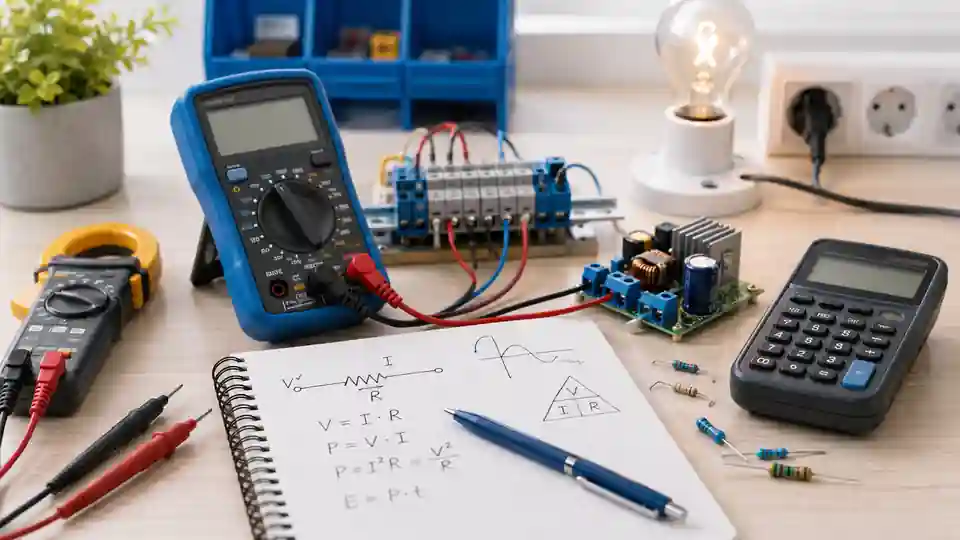
Power describes how quickly an appliance uses electrical energy while operating. Current, measured in amps, describes the electrical flow carried by a circuit. Cable conductors and protective devices must then be selected for the actual operating conditions, including circuit length, conductor material, installation method, ambient conditions and other relevant factors.
For this reason, a calculator result should never be interpreted as a direct instruction to install a particular cable or replace a breaker with a higher-rated one. Increasing a breaker rating without checking the wiring can remove essential protection and create a serious hazard. The calculator provides figures for an initial discussion; the final decision requires a professional assessment.
Understanding the main electrical values
| Value | What it describes | Why it matters |
|---|---|---|
| Power | The demand of one appliance or a group of appliances | Helps estimate the combined connected load |
| Current | The electrical load in amps carried by a circuit or home supply | Helps assess how the demand relates to wiring and circuit protection |
| Cable size | The conductor dimension that affects its current-carrying capacity | Must be selected for more than power alone, including the installation conditions |
| Voltage drop | The reduction in voltage along a cable run | Can become important on long circuits or where loads are sensitive to low voltage |
Common mistakes in household electrical estimates
Many mistakes begin with trying to find one simple answer for a system that needs to be assessed as a whole. When a breaker trips, for example, it may be tempting to focus only on replacing the breaker. The actual cause could be excessive load, damaged wiring, a poor connection, a faulty appliance or an unsuitable distribution of loads between circuits.
- calculating one appliance while ignoring other high-power devices that may operate at the same time;
- guessing appliance power instead of checking the rating label or technical documentation;
- confusing the total capacity of the home supply with the safe capacity of one socket or individual circuit;
- assuming that repeated tripping can be solved simply by installing a higher-rated breaker;
- ignoring the age and condition of wiring, connections, sockets and junction points;
- operating high-power appliances through unsuitable extension leads, adaptors or multi-socket devices.
A smell of hot plastic, sparks, scorch marks, repeated breaker operation or unusual heating at a plug, socket, cable or extension lead requires immediate attention rather than another online estimate. Stop using the affected equipment where it is safe to do so and arrange an inspection by a qualified electrician.
How to use the electrical calculators
- Prepare a list of the appliances or circuits you want to review.
- Find the rated power of each appliance in watts or kilowatts.
- Mark the appliances that may operate at the same time.
- Enter the available information into the relevant calculator and review the result.
- Pay particular attention to high-demand equipment such as water heaters, kettles, washing machines, space heaters, ovens, air conditioners and electric cooking appliances.
- Use the result to support a conversation with an electrician rather than as a final installation specification.
HomDera calculator results must not be treated as approval for DIY installation, rewiring or the selection of circuit breakers, cables, sockets, panels or protective devices. Electrical design, alterations and connections should be completed by a qualified professional and must comply with the standards and regulations applicable in your location.
When you should call an electrician
- a circuit breaker trips repeatedly or sockets, plugs, cables or extension leads become warm;
- you need to connect a water heater, electric cooker, oven, air conditioner or another high-power appliance;
- the project includes rewiring, a new electrical panel, replacement protective devices or additional circuits;
- the property has ageing aluminium wiring or the condition of the existing connections is unknown;
- you plan to connect an inverter, UPS, charger, generator or permanent backup power system;
- there is a burning smell, sparking, scorch damage, cable heating or unstable appliance operation.
A calculator can provide a quick estimate of connected load or a preliminary cable requirement, but final decisions about wiring, circuit protection, cable selection and equipment connection must be made after the installation has been assessed. Electrical mistakes can place both property and personal safety at risk.
How HomDera estimates electrical values and why the results are preliminary